Massage Gun Guide: How Percussion Devices Work and How to Use One Safely
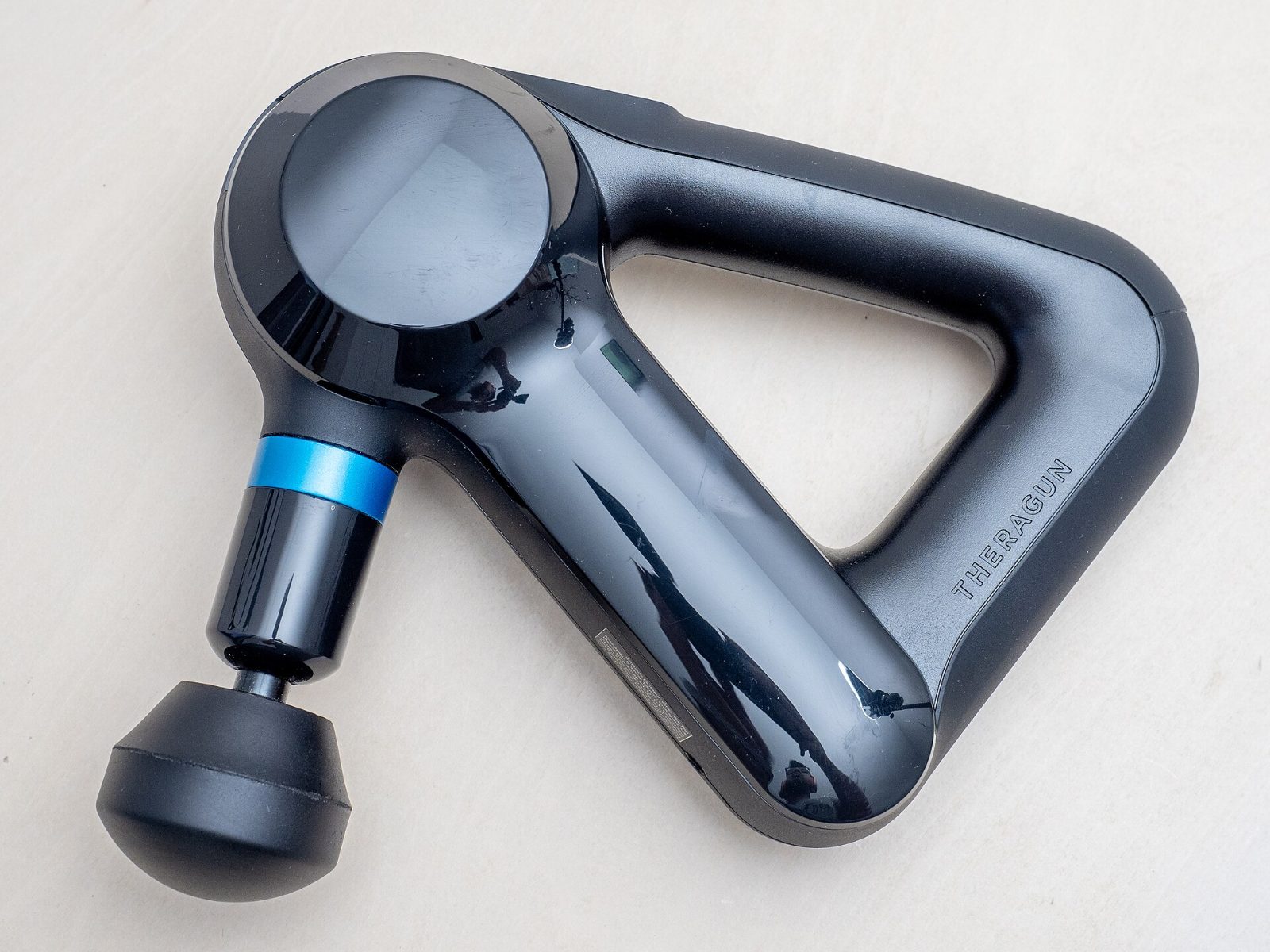
A massage gun is a handheld percussion device that drives a padded head back and forth rapidly against a muscle. Used for a minute or two per area, it can make muscles feel looser and less sore, and many people use it before or after exercise. It is a self-care tool, not a treatment for injuries, and there are places on the body where it should never be used.
How percussion massage works
Inside the device, a motor drives a shaft that moves the attachment forward and back many times per second. Two numbers describe this: the amplitude (how far the head travels, usually a few millimetres up to around 16 mm) and the frequency (how many strikes per minute). A larger amplitude reaches deeper; a higher frequency feels more like vibration.
Research on percussion devices is still limited, but studies suggest short-term improvements in range of motion and the feeling of soreness, similar to other forms of massage and foam rolling. There is no good evidence that massage guns flush out lactic acid, burn fat or speed up recovery from injuries.
Using it muscle by muscle
The basic method is the same everywhere: switch on at the lowest speed, rest the head on the muscle, let the device do the work, and glide slowly. Do not press hard.
| Area | Suggested head | Time | Notes |
|---|---|---|---|
| Calves | Round ball | 60 to 90 seconds per leg | Sit with the leg relaxed; avoid the back of the knee |
| Thighs (quads) | Flat or large ball | Up to 2 minutes per leg | Large muscle, can take medium speed |
| Hamstrings | Round ball | 60 to 90 seconds | Glide from just above the knee to below the buttock |
| Glutes | Large ball | Up to 2 minutes | Good area for firmer settings |
| Upper back | Round ball | 60 seconds per side | Stay on muscle beside the spine, never on it |
| Shoulders and upper trapezius | Soft ball | 30 to 60 seconds | Stay away from the front and sides of the neck |
| Forearms | Small ball or flat | 30 to 60 seconds | Useful for desk and gym grip fatigue |
Before a workout, 30 seconds per muscle at low speed is enough to warm up. After training, slower passes of one to two minutes per area are common. Pair it with the stretches in our five-minute self-massage routine.
Never use a massage gun on
- The front or sides of the neck, where major arteries and nerves run.
- The spine itself, the head, face or throat.
- Bony areas such as the kneecap, shin bone, elbow or ankle bones.
- Varicose veins, bruises, open wounds, burns or areas with recent sunburn.
- The abdomen, unless advised by a professional.
- A recent injury: a strain, sprain or suspected fracture.
Attachments explained
Most devices come with four to six heads:
- Round ball: all-purpose, most large muscles.
- Flat head: dense muscles such as thighs; spreads force.
- Bullet or cone: small focused point; use very briefly and gently.
- Fork: two prongs that sit either side of a muscle such as the calf or the Achilles area, used with caution.
- Cushion or soft head: sensitive areas and beginners.
If you are unsure, the ball and the soft head cover most needs.
Lighter and shorter is safer: if you are bracing or wincing, the setting is too high.
Who should check with a doctor first
Get advice from a doctor or physiotherapist before using one if you
- Have a history of deep vein thrombosis or a clotting disorder, or take blood thinners.
- Are pregnant.
- Have a pacemaker or other implanted electronic device.
- Have osteoporosis, diabetes with reduced sensation, or nerve damage.
- Have had recent surgery, an injection or a cosmetic procedure in the area.
- Have unexplained pain, swelling or warmth in a limb.
Stop and seek medical care if you notice sudden calf swelling or pain, bruising that appears easily, numbness or tingling that persists, or chest pain or breathlessness. Sudden calf pain and swelling can be signs of a blood clot and need urgent assessment.
What to look for when buying in the UAE
Massage guns are sold widely in UAE electronics stores, pharmacies, sports shops and online. Before buying:
- Stall force and amplitude. Stall force is how hard you can press before the motor stops. You do not need the highest; moderate figures suit most people.
- Noise. Some models are loud. Check reviews if you plan to use it at home in the evening.
- Battery and charging. Check the plug type and whether a UAE-compatible charger is included.
- Weight and grip. Heavy devices are tiring when reaching your own back.
- Warranty and authorised sellers. Buy from a seller who provides a local warranty. Very cheap unbranded units may lack safety certification.
Prices vary greatly by brand and features, so compare models in the same class rather than the cheapest and most expensive. For other device types, see our guide to massage machines.
Massage gun or a massage therapist?
A massage gun is convenient for quick sessions on easy-to-reach muscles. A trained therapist can assess where tension actually comes from, adjust pressure to your feedback and work on areas you cannot reach. Many people use both: the device between sessions, the therapist every few weeks or when something persists. If pain lasts more than a couple of weeks or keeps returning, see a physiotherapist or doctor rather than increasing the setting.
Caring for the device
Wipe attachments with a mild cleaning solution after use, especially after workouts in the heat. Do not leave the device in a hot car in summer: high temperatures can damage lithium batteries. Store it in its case and charge it according to the manual.
Frequently asked questions
How long should I use a massage gun on one muscle?
Usually 30 seconds to two minutes per muscle group. Longer is not better and can leave the area sore or bruised.
Can I use it every day?
Many people use it daily at low settings for short periods. If an area becomes tender or bruised, rest it for a few days.
Does it help with cellulite?
There is no good evidence that a massage gun reduces cellulite. Any change in appearance is temporary.
Can I use it on my neck?
Only on the muscles at the back of the neck and upper shoulders, at low speed with a soft head, and never on the front or sides of the neck.
Sources: NHS, American Council on Exercise, Mayo Clinic
Cover photo: Internationaler Verein für Öldispersionsbadetherapie, CC BY-SA 4.0. Last reviewed: 2026-11-25. General information only, not medical advice. Please consult a licensed practitioner in the UAE about your own situation.