Face Massagers: Rollers, Gua Sha and Electric Devices Compared
A face massager is any tool used to massage the skin and muscles of the face, from simple stone rollers and gua sha boards to electric vibration, microcurrent and heated or cooled devices. Most people use them to relax the face, ease jaw tension and reduce morning puffiness for a short time. The evidence for lasting anti-ageing effects is limited, so think of them as a pleasant routine rather than a treatment.
Types of face massager
| Type | How it works | What people use it for | Evidence |
|---|---|---|---|
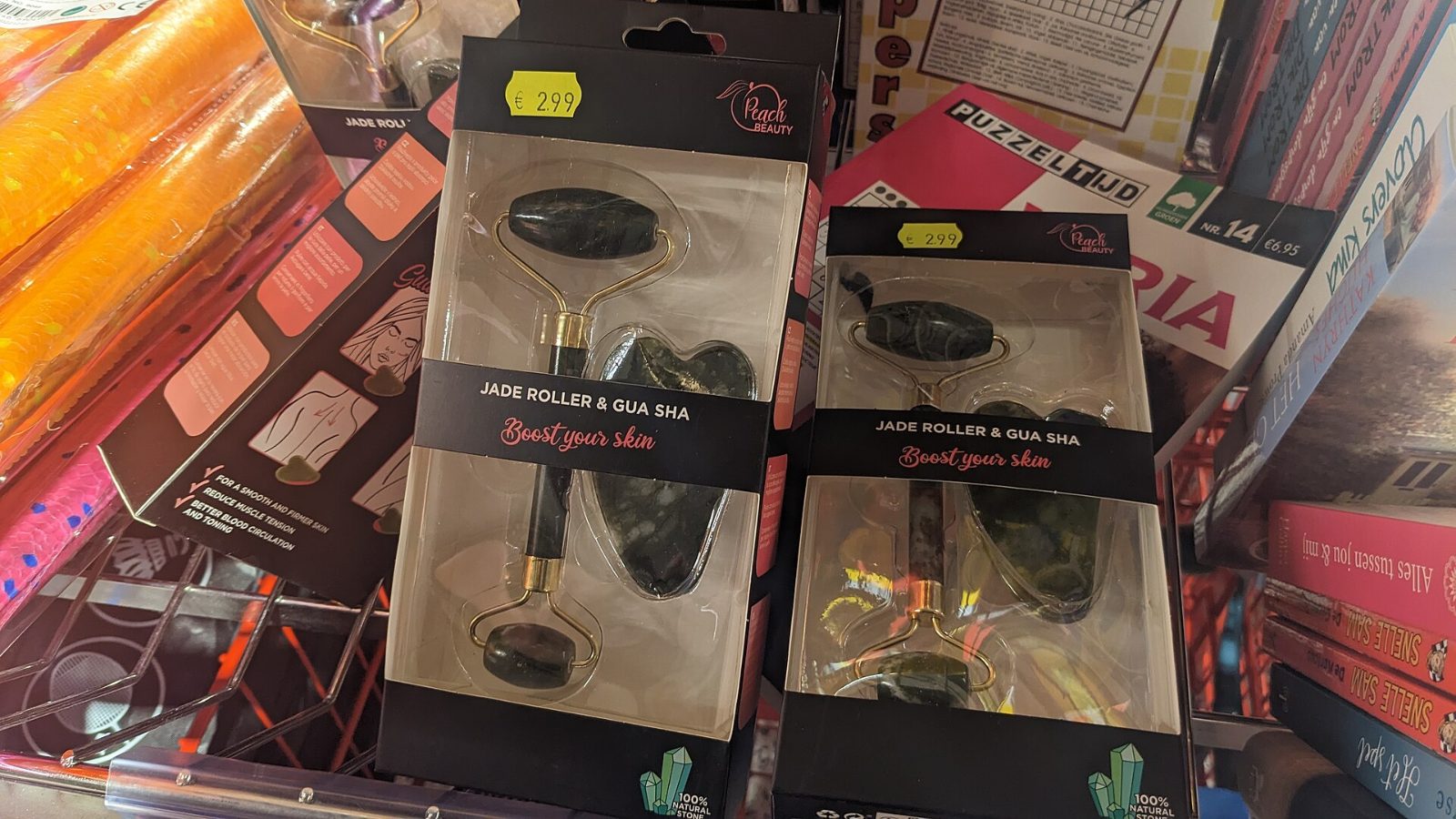
| Stone roller (jade, rose quartz) | Rolled over skin, often chilled | Morning puffiness, relaxing routine | Limited; cooling effect is temporary |
| Gua sha board | Flat stone scraped gently along the skin | Jaw and neck tension, puffiness | Small studies; mostly short-term effects |
| Vibration or sonic massager | Small motor vibrates a head | Relaxation, product application | Limited |
| Microcurrent device | Low electrical current through two probes | Marketed for firmness and lift | Small studies; results vary; contraindications apply |
| Heated or cooled device | Warmth or cold applied to skin | Comfort, puffiness | Temporary effects |
| Facial cupping set | Small silicone cups create suction | Massage and lymphatic-style strokes | Limited; can bruise |
What face massage can realistically do
Gentle massage moves fluid in the skin and can make the face look less puffy for a while, especially in the morning. It can relax the muscles of the jaw and forehead, which many people clench without noticing. It also feels pleasant and can be part of a calming evening routine.
What it cannot do is reliably remove wrinkles, reshape the face, burn fat, or replace sun protection. Sun exposure is the main driver of visible skin ageing, so in the UAE daily sunscreen does more for your skin long-term than any device. If a product promises permanent lifting, ask what evidence supports it.
The best anti-ageing tool for UAE skin is still sunscreen; a face massager is the relaxing extra.
How to use a face massager gently
- Start with clean hands, a clean face and a clean tool.
- Apply slip. A few drops of facial oil or a serum stops the tool dragging. Our guide to facial oil for face massage covers options.
- Work from the centre outwards and upwards, along the jaw, cheekbones and forehead.
- Finish downwards along the sides of the neck, using very light pressure.
- Keep it short: five to ten minutes is plenty.
Pressure should be light. The skin should not drag, turn red for long, or sting.
Cooling in a hot climate
Keeping a roller or gua sha in the fridge makes it feel refreshing after time outdoors. Do not put stones in the freezer and use them straight away on the skin; extreme cold can irritate it.
Electric devices: extra precautions
Microcurrent and other electrical devices have specific safety warnings in their manuals. Read them before buying.
Avoid electric face devices, or get medical advice first, if you
- Have a pacemaker or other implanted electronic device.
- Are pregnant.
- Have epilepsy.
- Have metal implants in the face or recent dental implants, depending on the device instructions.
- Have active acne, rosacea flares, broken skin or infection in the area.
- Have had injectables, threads, laser or a peel recently, unless your practitioner says it is fine.
If you have had fillers or botulinum toxin, ask the practitioner who treated you how long to wait before massaging the area. Our articles on facial massage after botox and massage after lip filler go into this.
Hygiene matters
Tools touch your skin daily and can carry bacteria. Wash stone tools with mild soap and water after each use and dry them fully. Clean electrical heads according to the manual, usually with a damp cloth or alcohol wipe, and never immerse devices that are not waterproof. Do not share face tools.
Who should not use a face massager
- People with active skin infection, cold sores, open wounds or inflamed acne in the area.
- Anyone with a rosacea flare, as heat and friction can trigger redness.
- People with fragile capillaries or who bruise easily, especially with cupping.
- Anyone with a new or changing mole, rash or lump: see a dermatologist first.
Stop using any tool if you notice persistent redness, bruising, breakouts or irritation.
Choosing one in the UAE
Face tools are sold in pharmacies, beauty retailers and online. Some points to consider:
Buying checklist
- Stone tools: check for smooth edges and no chips; real and imitation stones perform similarly, the material matters less than the shape.
- Electric devices: look for a local warranty, UAE-compatible charging and clear safety information.
- Avoid products making medical claims they cannot back up.
- Price does not predict results; simple tools used gently can be enough.
Adding it to your routine
Face massage fits easily into an evening routine after cleansing. A short session can also help if you clench your jaw during work or while driving. Pair it with the jaw and neck steps in our five-minute self-massage routine. If you clench heavily or wake with jaw pain or headaches, see a dentist or doctor, as you may need a night guard or other assessment.
Frequently asked questions
Does a face roller reduce wrinkles?
There is no strong evidence that rollers reduce wrinkles. They may make skin look less puffy for a short time.
Is gua sha safe for everyone?
Gentle facial gua sha is low risk for most people, but avoid broken or inflamed skin and use very light pressure. Avoid it if you bruise easily or take blood thinners, unless your doctor agrees.
How often can I use a face massager?
Most people use it once a day or a few times a week for five to ten minutes. Less is fine if your skin is sensitive.
Can I use a face massager after botox?
Ask the practitioner who treated you. Many advise avoiding pressure on treated areas for a short period afterwards.
Sources: American Academy of Dermatology, British Association of Dermatologists, U.S. Food and Drug Administration
Cover photo: Emilius123, CC BY-SA 4.0. Last reviewed: 2026-11-25. General information only, not medical advice. Please consult a licensed practitioner in the UAE about your own situation.