Trigger Point Massage: Finding and Releasing Muscle Knots Safely
Trigger point massage uses sustained, focused pressure on small tender spots in tight muscle, often called knots, to ease local pain and the referred pain they can send elsewhere. It is commonly used for neck, shoulder and upper back tension. Many people find it helpful, although researchers still debate exactly what trigger points are.
In this guide
- What a trigger point is
- How a trigger point session works
- Trigger point massage vs related approaches
- Common areas people treat
- Trying it gently at home
- Why knots keep coming back
- Choosing a therapist for trigger point work
- When muscle pain is not just a knot
- Who should be cautious
- Frequently asked questions
What a trigger point is
A trigger point is usually described as a small, very tender spot within a taut band of muscle. Pressing on it often reproduces a familiar ache, and sometimes that ache spreads to another area. A classic example is a tender point in the upper trapezius, the muscle between neck and shoulder, which can send pain up the side of the neck towards the head.
This spreading pain is called referred pain, and it is the main reason trigger point work is popular. People often rub where it hurts, while the real source sits somewhere else.
There is an honest caveat. Scientists do not fully agree on what trigger points are physiologically, and studies of how reliably different examiners find the same points have mixed results. That does not cancel out people’s experience of relief. It means trigger point massage should be seen as one useful tool for muscle tension, not a complete explanation of pain.
How a trigger point session works
A therapist first warms the area with broader strokes, then searches for tender spots with fingertips, thumbs, knuckles or an elbow. When a point is found, they press and hold steady pressure, often for somewhere between a few seconds and a minute or two, while you breathe slowly. The tenderness often eases as pressure is held, after which the muscle is stretched or treated with gentle strokes.
The pressure should feel strong and “good sore”, not sharp or unbearable. A common way therapists describe it is on a scale: aim for a level you can relax into, rather than one that makes you hold your breath or tense up elsewhere.
Trigger point massage vs related approaches
| Approach | What it targets | Feel | Who usually does it |
|---|---|---|---|
| Trigger point massage | Specific tender spots and referred pain | Focused, held pressure | Massage therapists, physiotherapists |
| Deep tissue massage | Deeper muscle layers generally | Slow, firm strokes | Massage therapists |
| Myofascial release | Fascia and broader tension patterns | Slow sustained stretch | Massage therapists, physiotherapists |
| Dry needling | Trigger points with a thin needle | Twitch, brief ache | Licensed clinicians only |
You can compare the wider set of massage styles in our massage styles comparison.
Common areas people treat
- Upper trapezius and levator scapulae: neck and shoulder tension, often linked to long hours at a laptop or phone.
- Rhomboids and mid-back: the ache between the shoulder blades.
- Forearm muscles: tension from typing, gaming or gripping.
- Glutes and hip muscles: sometimes involved in lower back and hip discomfort.
- Calves: tightness after walking, running or long flights out of Dubai or Abu Dhabi.
Trying it gently at home
You can apply light trigger point pressure yourself with your fingers, a tennis ball against a wall, or a massage ball. Our five-minute self-massage routine includes simple positions.
Home method in four steps
- Find a tender spot by slowly exploring a tight muscle.
- Press with moderate pressure you can breathe through.
- Hold for around 20 to 60 seconds, or until the tenderness eases.
- Follow with gentle movement or a stretch, then move on. Do not dig at one spot repeatedly.
Avoid pressing on the front and sides of the neck, the spine itself, the back of the knee, and any area that feels numb, hot or swollen. Massage guns can be used on large muscles but should not be held on bony areas or the neck.
Why knots keep coming back
Releasing a tender spot often brings relief for hours or days, but if the same point returns every week, something in daily life is usually feeding it. Common contributors are long, still postures, such as hours at a desk or behind the wheel on Sheikh Zayed Road, carrying a heavy bag on one shoulder, poor sleep, stress that keeps the shoulders raised, and sudden jumps in training load at the gym.
Simple changes often help more than stronger pressure:
- Set a reminder to stand, roll the shoulders and look away from screens every 30 to 45 minutes.
- Raise the laptop screen closer to eye level and keep the keyboard near the body.
- Alternate the shoulder you carry bags on, or use a backpack with both straps.
- Build strength gradually in the muscles that keep getting tight, ideally with guidance from a physiotherapist.
- Stay hydrated, particularly in summer when time outdoors and air conditioning both dry you out.
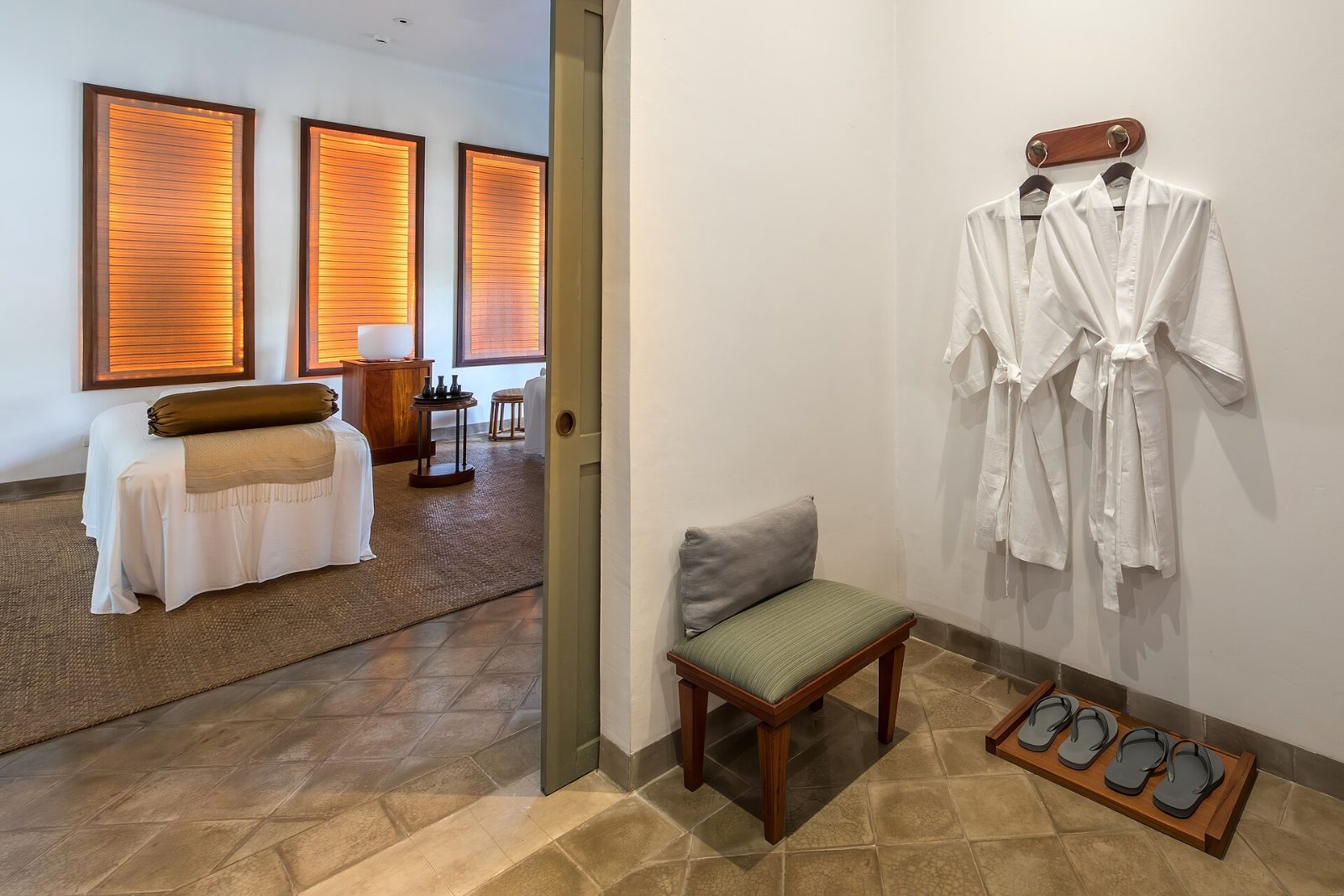
Choosing a therapist for trigger point work
Look for a therapist who asks about your pain history, checks for warning signs before starting, and explains what they are doing. They should invite feedback on pressure and adjust without fuss. In the UAE, massage and physiotherapy services operate under different licensing depending on the emirate and the type of service. If your pain is linked to an injury, a medical condition or nerve symptoms, a licensed physiotherapist working in a health facility is usually the better first stop, and they may combine manual pressure with exercise and other treatments.
Be wary of anyone who promises to “fix” long-standing pain in one session or insists that more pain means better results.
When muscle pain is not just a knot
See a doctor promptly if you have
- Pain after a fall, accident or injury
- Numbness, tingling, or weakness in an arm or leg
- Neck pain with fever, severe headache or stiffness bending the neck forward
- Chest, jaw or arm pain, especially with breathlessness or sweating, which needs emergency care
- Night pain, unexplained weight loss, or pain that keeps getting worse
- Calf pain with swelling, warmth or redness
Ongoing pain that lasts weeks despite rest and gentle care deserves assessment by a doctor or licensed physiotherapist.
Who should be cautious
Ask your doctor before trigger point work if you take blood thinners, have a bleeding disorder, osteoporosis, recent surgery, a nerve condition, or are pregnant. Tell the therapist about any of these on the intake form.
If you find yourself bracing against the pressure, it is too much. Relaxation is what lets the muscle let go.
Frequently asked questions
Is trigger point massage supposed to hurt?
It is often uncomfortable but should stay tolerable and ease while pressure is held. Sharp, burning or electric pain means stop.
Will I be sore afterwards?
Mild soreness for a day or two is common. Water, gentle movement and a warm shower usually help.
How often can I have it?
It depends on your body and the therapist’s advice. Giving tissues a few days between strong sessions is a common approach.
Is trigger point massage the same as dry needling?
No. Massage uses pressure. Dry needling uses a fine needle and should only be done by appropriately licensed clinicians.
Sources: Mayo Clinic, NHS, National Center for Complementary and Integrative Health
Cover photo: Basile Morin, CC BY-SA 4.0. Last reviewed: 2026-11-25. General information only, not medical advice. Please consult a licensed practitioner in the UAE about your own situation.