Cupping Massage: How Moving Cups Work, Marks and Who Should Skip It
Cupping massage uses glass, silicone or plastic cups to create suction on the skin, which is then either left in place or glided across oiled skin. People mainly use it for a strong, lifting sensation on tight back, shoulder and leg muscles. The research on cupping is limited and mixed, so it is best treated as a comfort and relaxation therapy rather than a cure.
Cupping massage, static cupping and hijama
The word “cupping” covers several different practices, and it helps to know which one you are booking.
| Type | What happens | Skin broken? | Typical setting |
|---|---|---|---|
| Moving (sliding) cupping massage | Cups glide over oiled skin with light suction | No | Spas, massage therapists |
| Static (dry) cupping | Cups stay in one place for a few minutes | No | Massage, physiotherapy, traditional medicine |
| Wet cupping (hijama) | Small cuts are made and blood is drawn into the cup | Yes | Licensed medical or complementary medicine facilities |
| Facial cupping | Very small cups with gentle suction on the face | No | Facial and beauty treatments |
This guide focuses on the first two, which are what most spas mean by “cupping massage”. Wet cupping is an invasive procedure. In the UAE it should only be done by a licensed practitioner in a licensed facility with proper sterile technique, never at home or by an untrained person.
How the suction feels and what it is thought to do
Traditional massage presses tissue down. Cupping does the opposite: it pulls skin and the tissue just beneath it upward into the cup. With moving cupping, the therapist slides the cup along a muscle, which many people describe as a deep, dragging stretch. With static cupping, the cup sits still and the pull is felt as tightness that gradually eases.
Practitioners often say cupping increases local blood flow and helps tight areas feel looser. Increased circulation in the skin is visible, because the area reddens. Beyond that, claims about “detox”, removing toxins or treating internal disease are not supported by good evidence, and you should be wary of anyone who promises them.
What the evidence says so far
Cupping has been studied mostly for neck pain, lower back pain and general muscle soreness. Reviews by public health bodies describe the evidence as limited: many studies are small, short or hard to blind, because it is difficult to give someone a convincing “fake” cupping session. Some people report less pain and stiffness for a while after treatment, but it is not clear how much of that comes from the suction itself, from the massage that usually comes with it, or from simply resting and being cared for.
That does not mean cupping is useless. It means it is reasonable to try it for comfort if you are otherwise healthy, while keeping expectations modest and not delaying proper assessment of pain that is new, severe or getting worse.
The circular marks explained
Cupping often leaves round red, purple or brownish marks. They come from small blood vessels under the skin breaking under suction, similar to a bruise, although they are usually painless. Darker marks are common on areas that feel tight or where suction was stronger or longer.
About cupping marks
- They usually fade over several days to around two weeks.
- They are more visible on lighter skin and after static cupping.
- They are not a sign of “toxins” leaving the body.
- Tell your therapist if you need to avoid visible marks, for example before an event or a swimming holiday.
Moving cupping with lighter suction tends to leave fainter, more diffuse redness than static cups left in place.
What a session looks like
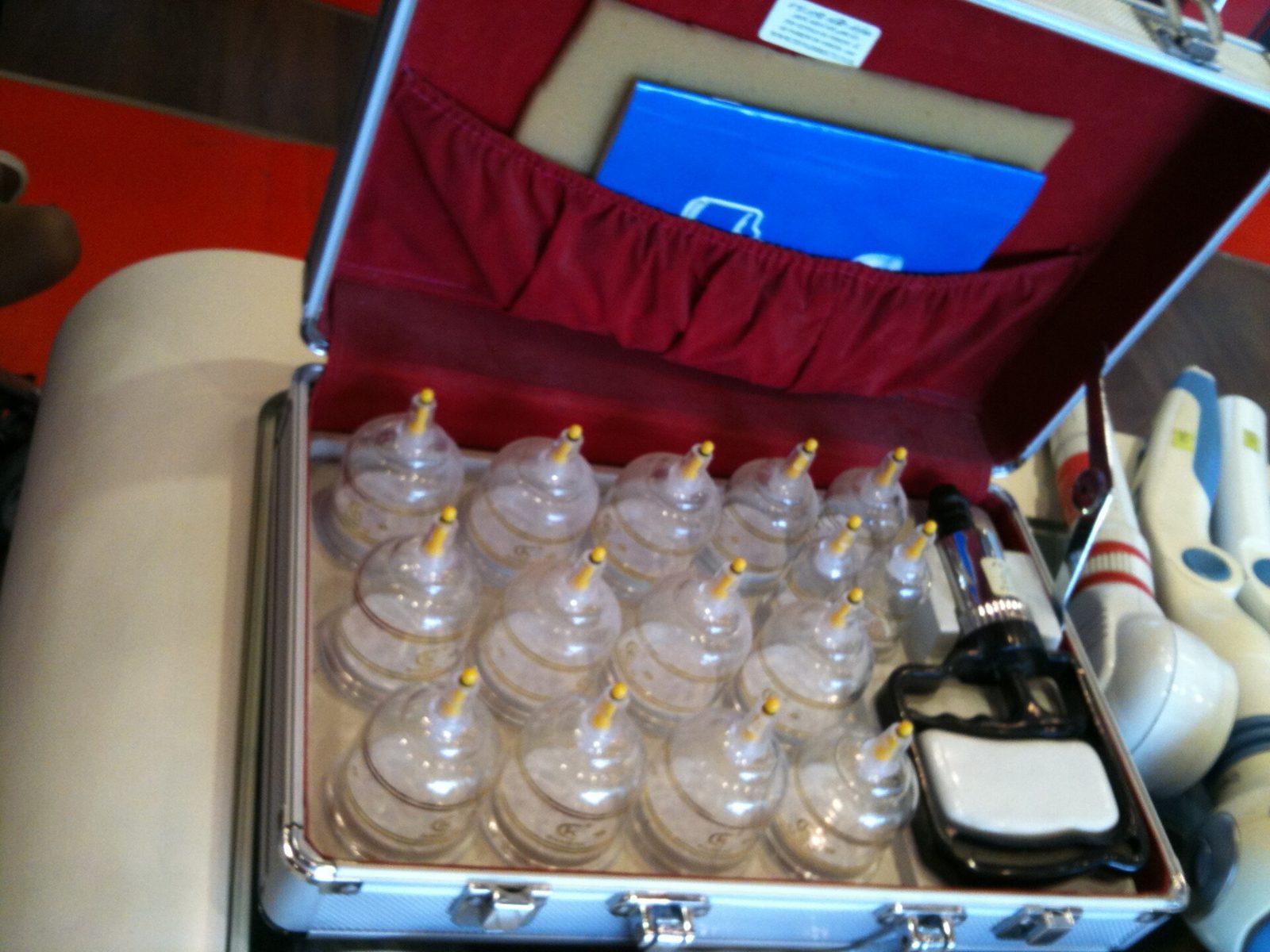
A typical cupping massage starts with ordinary hands-on work to warm up the area. The therapist then applies oil and places a cup, squeezing a silicone cup or using a pump or a brief flame inside a glass cup to create suction. Flame cupping should only be done by someone well trained; the cup is warmed and removed from the flame before it touches the skin.
The cups are then moved in long strokes along the back, shoulders, thighs or calves, or left in position for a few minutes. Many therapists combine cupping with Swedish, deep tissue or sports massage in the same session. If you want to see how cupping sits alongside other styles, our massage styles comparison gives an overview.
You can and should give feedback. Suction can be reduced instantly by letting a little air in. The sensation should feel strong but not sharp.
Who should avoid cupping or check first
Avoid cupping or speak to a doctor first if you
- are pregnant (avoid the abdomen and lower back completely, and ask your doctor before any cupping)
- take blood thinning medication or have a bleeding or clotting disorder
- have varicose veins, a history of deep vein thrombosis, or fragile skin
- have sunburn, eczema flare, broken skin, open wounds or a skin infection in the area
- have diabetes with reduced skin sensation, or poor circulation
- have a heart condition, a pacemaker, or you are unwell or feverish
- have had recent surgery or a cosmetic procedure in the area
Children, older adults with thin skin and anyone with low platelet counts are also usually advised against it. UAE sun is another practical factor: freshly cupped skin should be protected from strong sunlight while it settles.

After a cupping massage
Most people feel loose and a little tired afterwards. Drink water, keep the area covered from direct sun, and avoid very hot showers, saunas or intense workouts on the same day if the marks are fresh. Mild tenderness can last a day or two.
Seek medical advice if you notice blistering, burns, signs of infection such as spreading heat, swelling or pus, or bruising that is far stronger than expected. These are not normal reactions.
Cupping can feel very good on tight muscles, but marks are bruises, not detox. Choose a trained therapist and skip it if you have a bleeding risk.
Using cupping wisely
If you enjoy the sensation, cupping can be part of an occasional massage routine. It does not replace medical care for persistent back or neck pain, numbness, weakness or pain after an injury. Those need assessment by a doctor or licensed physiotherapist. Between sessions, gentle movement and a short self-massage routine can help you stay comfortable.
Frequently asked questions
Does cupping massage hurt?
It should feel strong and pulling, not painful. Ask the therapist to reduce suction if it becomes sharp.
How long do cupping marks last?
Usually several days, sometimes up to about two weeks, depending on suction, duration and your skin.
Is cupping the same as hijama?
No. Hijama is wet cupping, where the skin is cut. Cupping massage uses suction only and does not break the skin.
Can I do cupping at home?
Silicone cups are sold for home use, but technique matters and the risks above still apply. Start very gently, avoid sensitive areas and stop if anything feels wrong.
Sources: National Center for Complementary and Integrative Health, Mayo Clinic, Dubai Health Authority
Last reviewed: 2026-11-25. General information only, not medical advice. Please consult a licensed practitioner in the UAE about your own situation.