Thailand Massage: What Traditional Nuad Thai Involves and Who It Suits
Thailand massage, known at home as nuad thai, is a clothed, mat-based bodywork style that combines rhythmic palm and thumb pressure along energy lines with assisted, yoga-like stretches. In the UAE you can book it at day spas, hotel wellness floors and specialist Thai centres, and a typical session runs 60 to 120 minutes with no oil at all.
Where Thai massage comes from
Traditional Thai massage grew out of a blend of influences: Buddhist monastic medicine, Indian Ayurvedic ideas that travelled along trade routes, and local folk healing. Thai practitioners traditionally honour Jivaka Kumar Bhacca, a physician described in early Buddhist texts, as the founding teacher, although the practice as we know it today was shaped over centuries inside Thailand.
The temple of Wat Pho in Bangkok is the most famous reference point. In the nineteenth century, carved stone inscriptions showing pressure points and treatment lines were placed in its walls so the knowledge could be shared publicly. The temple still hosts a well-known massage school. In 2019, UNESCO added Nuad Thai, traditional Thai massage to its Representative List of the Intangible Cultural Heritage of Humanity, which recognises it as a living tradition rather than a spa trend.

What actually happens in a session
You lie on a firm padded mat, usually on the floor, wearing loose clothing that the venue often provides. The therapist works through the body in a set order, commonly starting at the feet and moving upward, using:
- Palms and thumbs for slow, rhythmic pressure along lines the tradition calls sen
- Forearms, knees and feet for broader pressure on large muscle groups
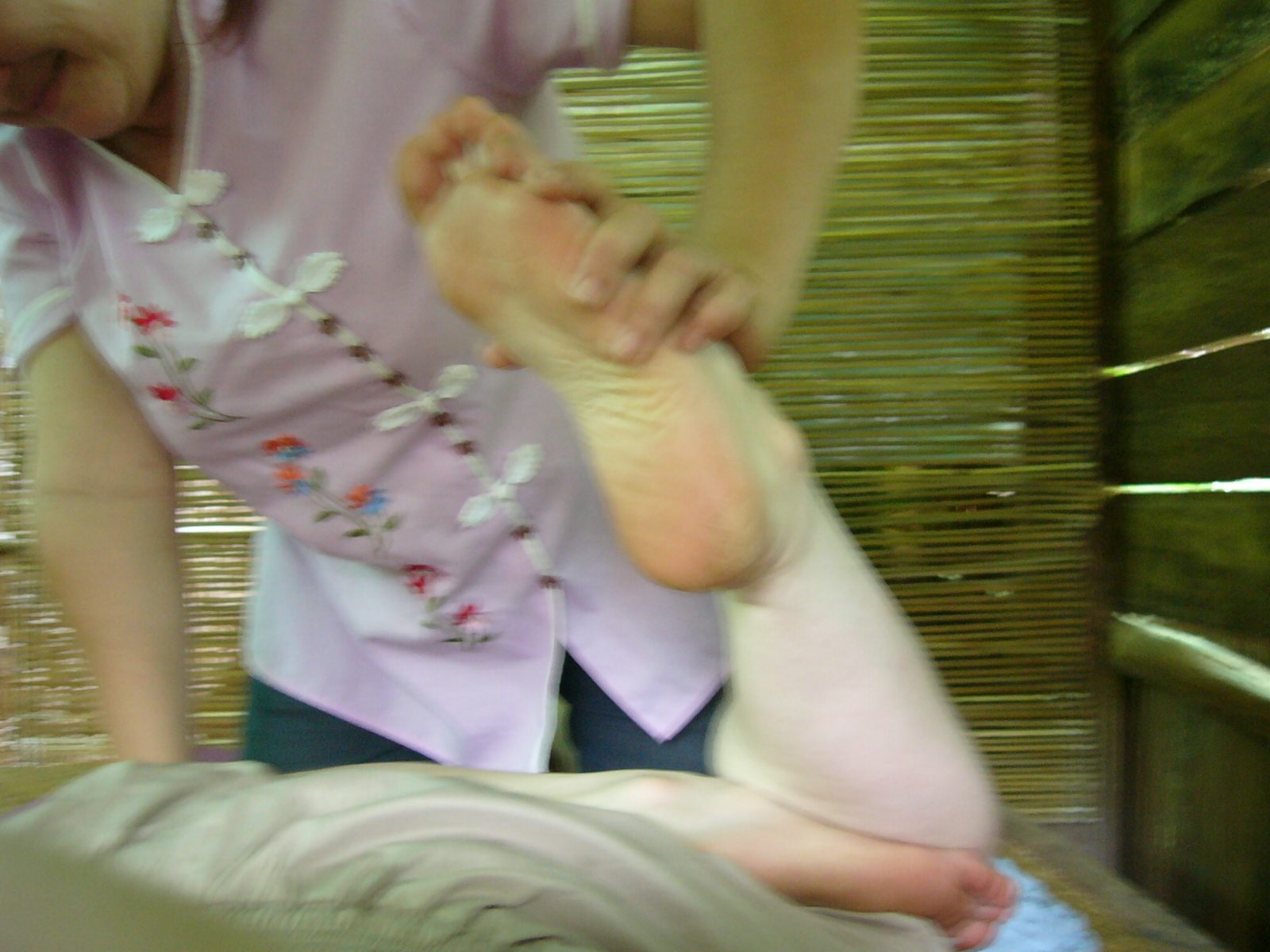
- Assisted stretches, where the therapist moves your limbs and trunk into positions that resemble yoga poses
- Rocking and gentle traction to release the hips, spine and shoulders
There is no oil in the classic version, so you stay dressed and there is no draping. Many UAE spas also offer a hybrid “Thai oil massage”, which drops most stretches and is closer to a firm Swedish massage. Ask which one you are booking.
Before you book
- Say whether you want traditional dry Thai massage or Thai oil massage
- Mention any injury, surgery, pregnancy or joint replacement at the booking stage, not on the mat
- Eat lightly at least an hour before: the stretches involve your abdomen and hips
- Choose 90 minutes for your first session if you can, so the therapist is not rushing the stretching sequence
Thai massage compared with other popular styles
Thai massage is often compared with Swedish and deep tissue massage, which are the two styles most UAE spa menus are built around. Our massage styles comparison covers the full list, but here is the short version.
| Feature | Thai massage | Swedish massage | Deep tissue massage |
|---|---|---|---|
| Clothing | Fully clothed | Undressed, draped | Undressed, draped |
| Oil | None (classic version) | Yes | Yes |
| Surface | Floor mat | Massage table | Massage table |
| Main technique | Pressure plus assisted stretching | Long gliding strokes | Slow, focused pressure on deeper layers |
| Feels like | Active, rhythmic, sometimes intense | Relaxing and flowing | Firm, targeted, can be uncomfortable |
| Typical length | 60 to 120 minutes | 60 to 90 minutes | 60 to 90 minutes |
What people find it helps with
Research on massage in general, summarised by bodies such as the US National Center for Complementary and Integrative Health, suggests it can help in the short term with feelings of stress and with some kinds of muscle and back discomfort. Studies specific to Thai massage are smaller and vary in quality, so treat the claims you see on spa menus with care.
What people commonly report after a well-delivered session:
- A sense of looser hips, hamstrings and lower back, mainly from the stretching
- Feeling energised rather than sleepy, which is the opposite of what many expect from a massage
- Easier movement after long flights or long days sitting in an office or a car on Sheikh Zayed Road
Thai massage feels less like being treated and more like doing guided, passive yoga with someone else providing the effort.
None of this replaces medical assessment. If pain is persistent, sharp or getting worse, a licensed physiotherapist or doctor should look at it first.
Who should avoid it or take care
Because Thai massage combines firm pressure with stretching, it is not right for everyone. Speak to your doctor before booking if any of the following applies:
Check with a doctor first if you have
- Recent surgery, fractures or a joint replacement
- Osteoporosis or a history of fragility fractures
- A history of blood clots (deep vein thrombosis) or you take blood thinners
- Uncontrolled high blood pressure or a heart condition
- A spinal disc problem or nerve symptoms such as numbness or tingling down the leg
- Pregnancy: some therapists offer adapted side-lying sessions, but classic Thai stretches are not suitable
Stop the session and seek medical help if you feel sudden sharp pain, dizziness, chest pain, or new numbness or weakness. Mild soreness for a day or two can be normal, especially after a first session, but bruising or swelling is not something to ignore.
Booking Thai massage in the UAE
Thai massage is widely available across Dubai, Abu Dhabi and Sharjah, from hotel spas to small neighbourhood centres. Prices vary a lot depending on location, session length and whether you are in a hotel or a standalone spa, so compare a few current menus rather than relying on a single quoted figure.
A few practical points that help you choose well:
- Check licensing. Any spa should hold a valid trade licence. If you want massage for a medical complaint, look for a physiotherapist or therapist licensed by the DHA in Dubai, the DOH in Abu Dhabi or MOHAP in the northern emirates.
- Ask about the therapist’s training. Many experienced Thai therapists trained in Thailand, sometimes at Wat Pho or other recognised schools. It is fine to ask.
- Look at the room setup. A proper Thai room has a floor mat and enough space for the therapist to move around you. A table-based “Thai” massage is usually a hybrid.
- Plan around the heat. If you have a session in summer, avoid going straight from a hot car to the mat, and drink water before and after.
- Communicate pressure. Thai therapists are used to adjusting. “Softer” and “stronger” are enough.
Aftercare
Drink water, avoid a heavy workout for the rest of the day and give tight areas a gentle stretch in the evening. If you want to keep the benefits going between appointments, a short daily routine like our five-minute self-massage routine is an easy place to start.
Frequently asked questions
Is Thai massage painful?
It should feel firm and sometimes intense, especially in the stretches, but it should not be sharply painful. Tell the therapist straight away if a position hurts; they can reduce the range or skip it.
What should I wear for Thai massage?
Loose, stretchy clothing such as yoga trousers and a T-shirt. Most spas in the UAE provide a cotton outfit to change into, so you can simply ask when booking.
How often can I have Thai massage?
Many people book once every few weeks. If you are new to it, wait until any soreness from the first session has fully settled before booking another, and let your body guide the frequency.
Is Thai massage the same as Thai oil massage?
No. Traditional Thai massage is dry and done on a mat with stretches. Thai oil massage uses oil on a table and has few or no stretches, so it feels closer to a firm Swedish massage.
Sources: UNESCO Intangible Cultural Heritage, NCCIH: Massage Therapy, Dubai Health Authority
Cover photo: ryan harvey from Portland, OR, CC BY-SA 2.0. Last reviewed: 2026-11-25. General information only, not medical advice. Please consult a licensed practitioner in the UAE about your own situation.